With a sigh of relief from us, in December the accelerators at CERN finally took a break and Kurt ended his final shift after nine months of 24-hour shift schedules. So, with only three hours of sleep separating Kurt’s final data-taking and our flight taking off, we hopped across the English Channel for a few days of fun in Wales and England. The reason for our trip was a meeting that Kurt had at Swansea University—Kurt’s first time stepping onto the campus of the university he works for—but we decided to do some running around the UK while we were at it. And we were so glad we did. Wales is officially on our list of countries we love.
We began our trip in Cardiff, the capital of Wales. My enjoyment of this city officially reached obsession levels. It has everything I love in a city: history, beautiful architecture, a gorgeous coastline, lots of great restaurants and pubs, adorably winding alleys and arcades hiding cute small businesses, lively locals out and about enjoying their city, and a multitude of holiday cheer. Oh yeah, and a castle.
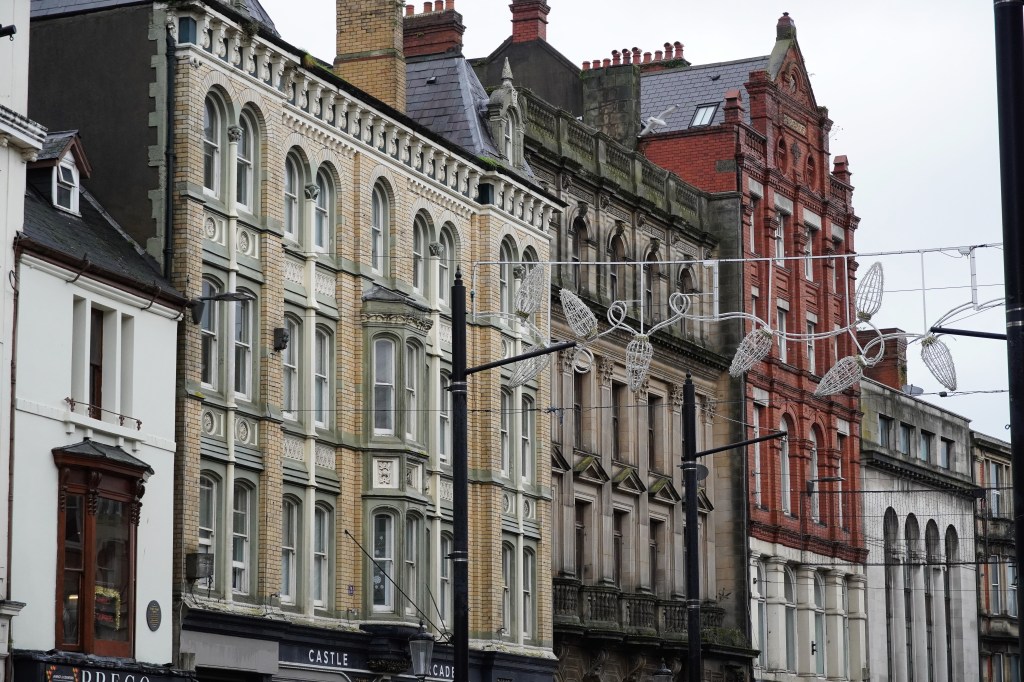
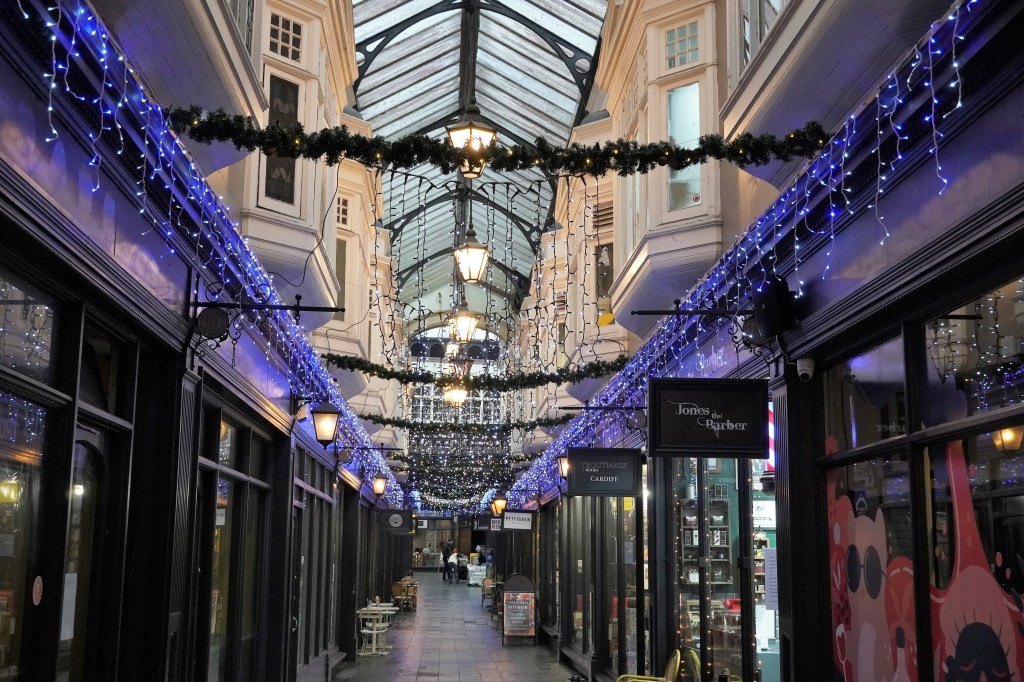
We arrived in Cardiff and immediately headed out and about in the city center along with the rest of the very merry population. Everyone was out in festive holiday attire, hanging out at the pubs and Christmas market. We enjoyed locally made mulled wine and all kinds of Christmas market stalls selling a multitude of local art and specialties. It turns out that almost anything can be turned into a mulled hot beverage—Welsh gin, cider, mead, elderberry wine, you name it. So, of course, we had to try each one!


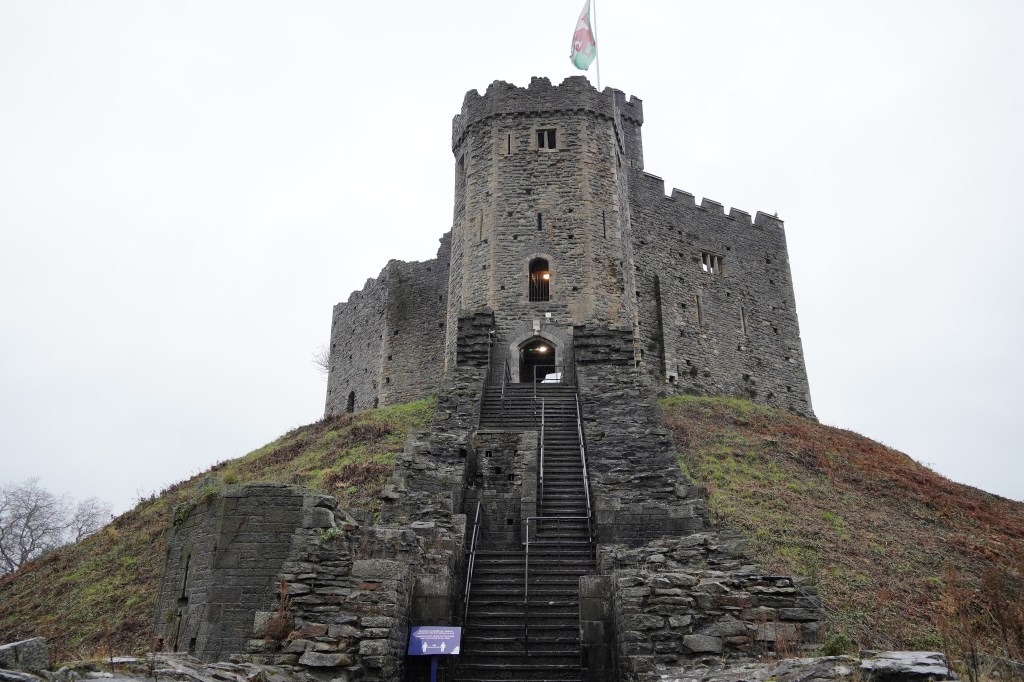
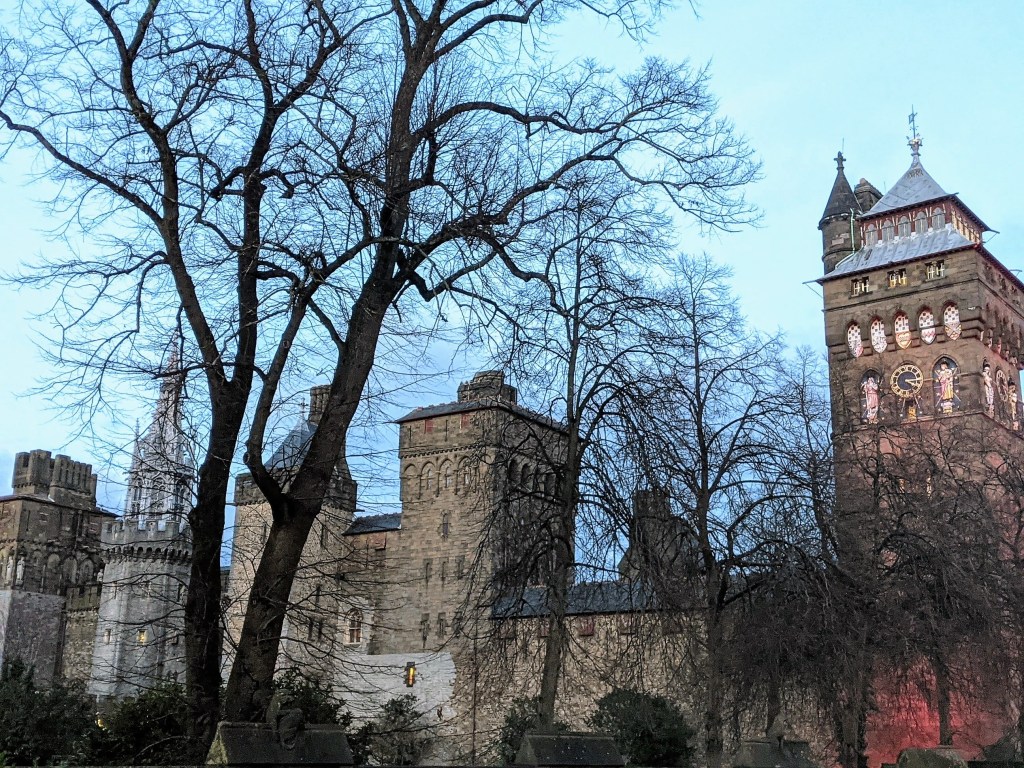
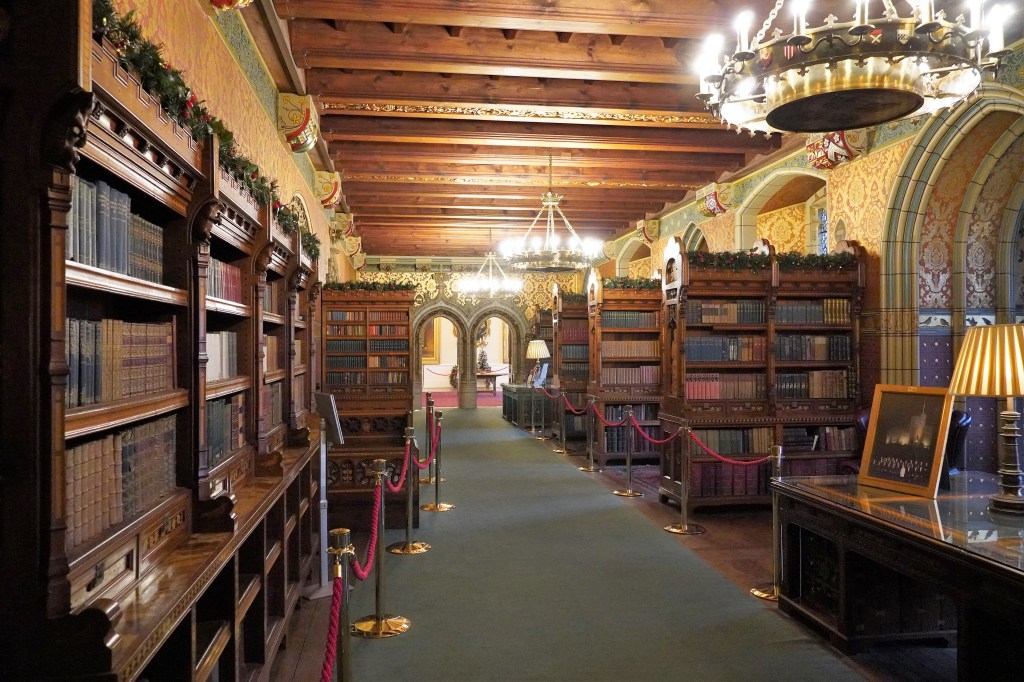
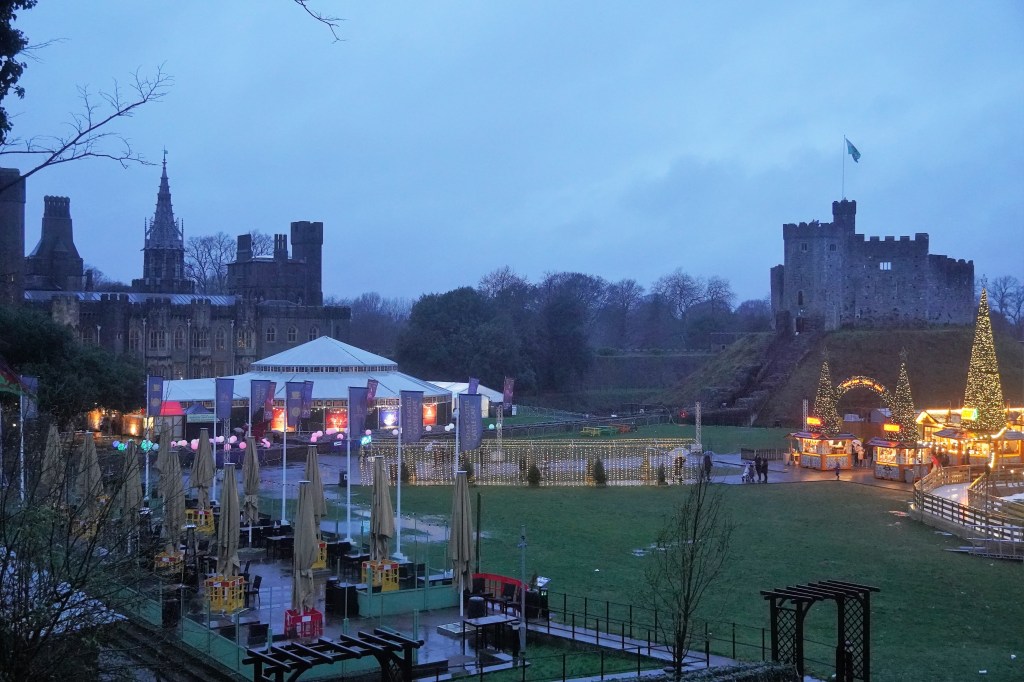
Our next day was devoted to exploring every inch of Cardiff Castle, an amazing structure commanding a central position in town. This complex contains 2,000 years of history, and we were intent on learning every bit of it, despite the “constant soaking rain” in the forecast. Soaking rain is exactly what we got, along with cold temperatures and high winds, which was certainly an uncomfortable combination, though we never let weather rain on our parade, so we plunged ahead (literally, through mud and flooding streets) to enjoy the castle. The castle complex is surrounded by walls that date back to the original Roman fort built there in 55 AD when the Romans occupied the region. The original walls are still visible! The castle keep and moat were built on the site of the Roman fort by the conquering Norman forces shortly after the Norman conquest, potentially at the direction of William the Conqueror himself. Over the centuries, the castle saw action during the many Welsh uprisings, and the Black Tower, which was used as a prison, alternatingly saw the imprisonment and executions of both Catholics and Protestants depending on the religion of the current monarch and who was thus considered a heretic. Fast-forward centuries, and the walls of the castle were used as air raid shelters for the residents of Cardiff during World War II. With 2,000 years of history to cover, it’s no wonder that we spent all day exploring every stone of the castle complex, including the grandeur of the main neo-Gothic mansion, which was dressed up for the holidays.
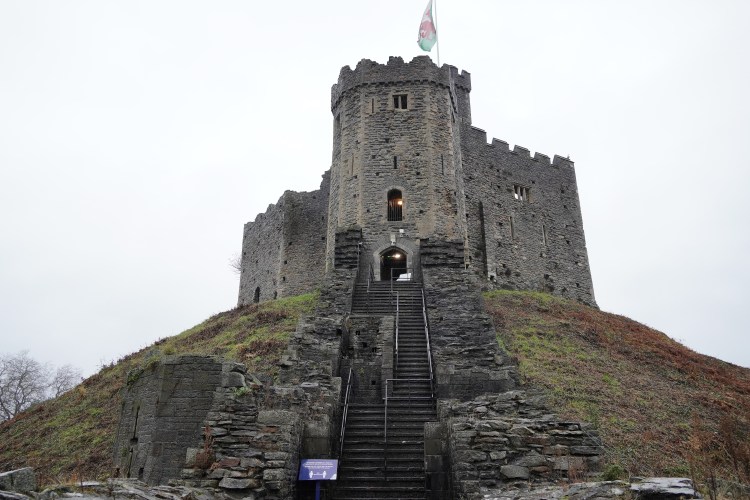
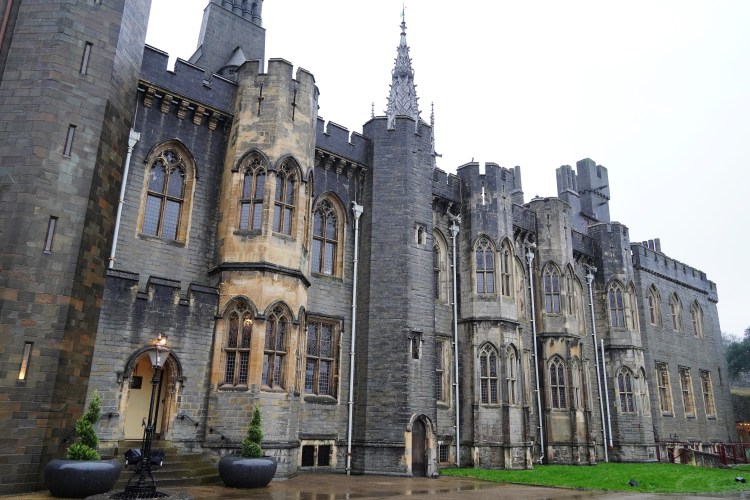
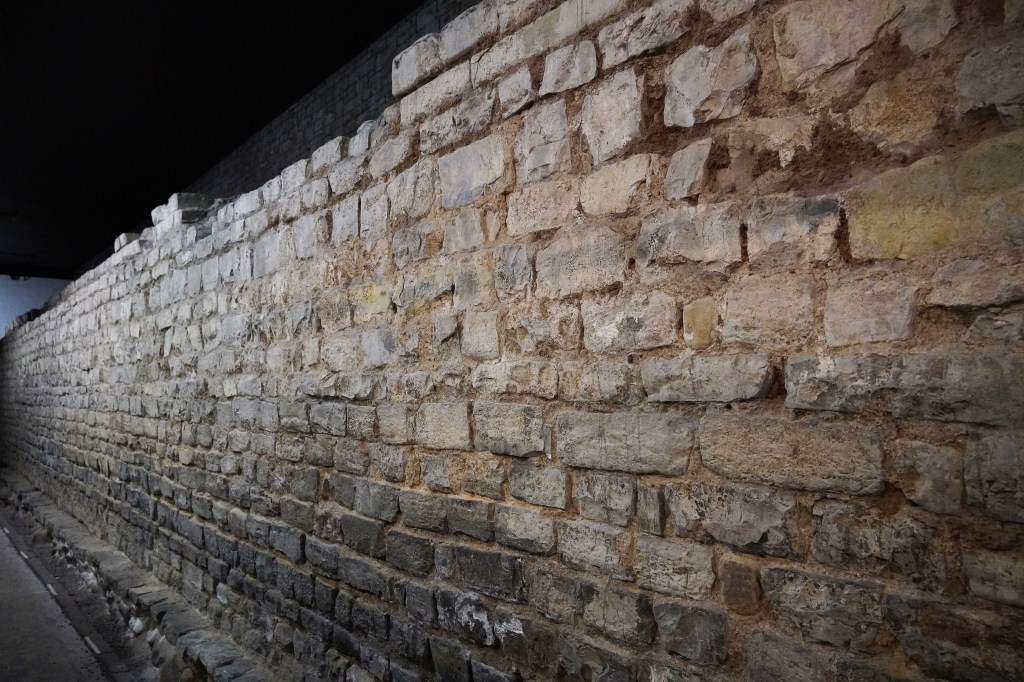
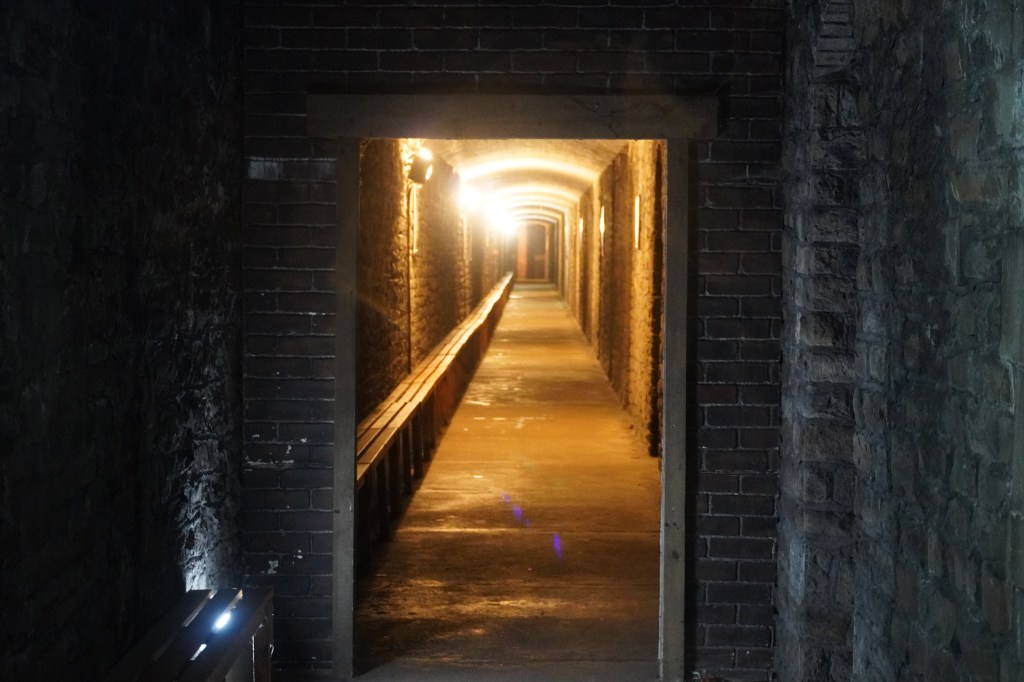



By the time late afternoon rolled around, we were wet and chilled to the bone, and it was the perfect time to step into the warmth of a pub for food and the World Cup final.
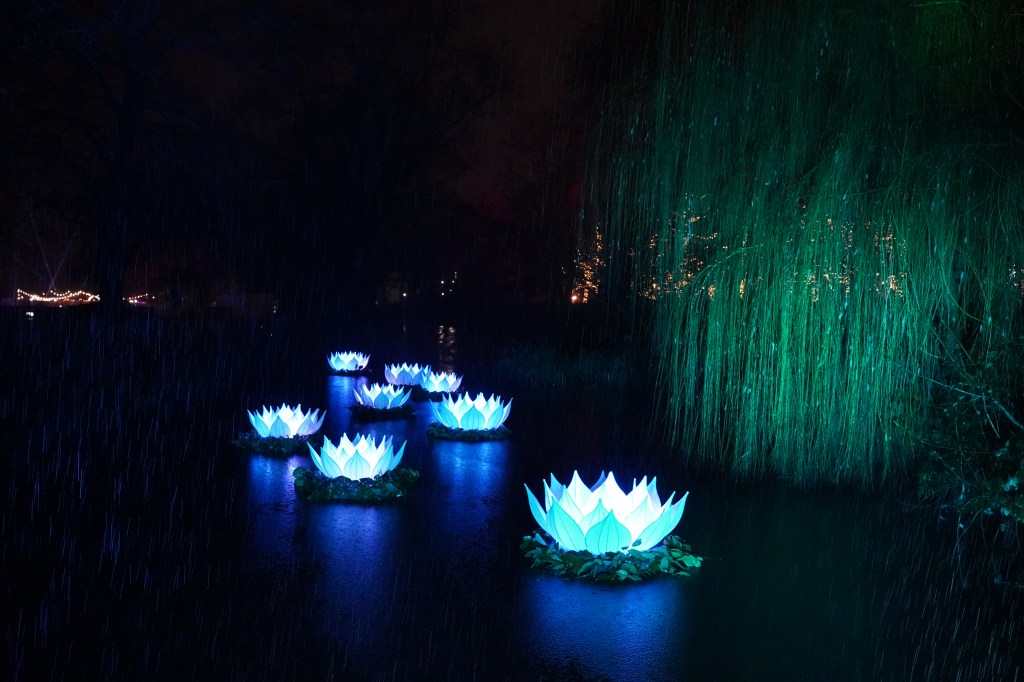
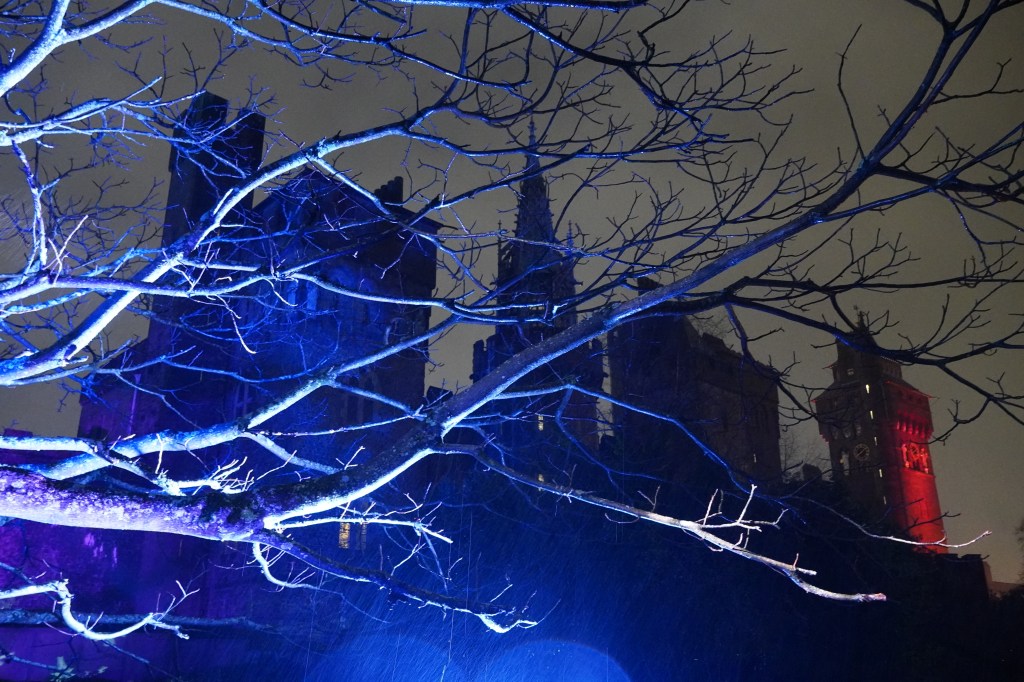
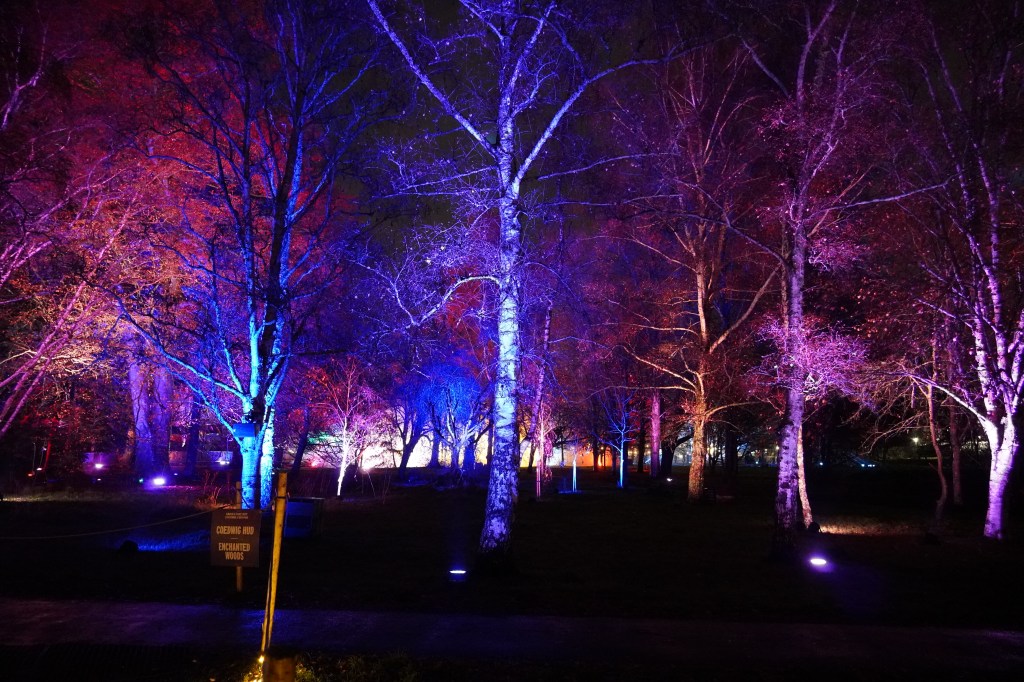
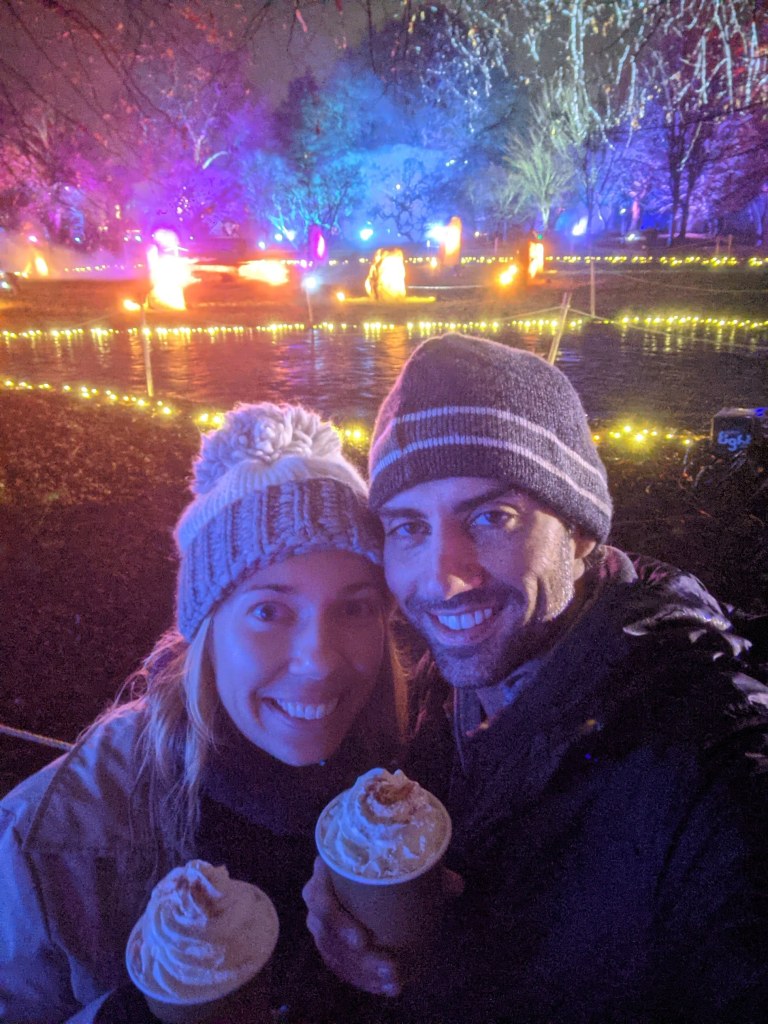
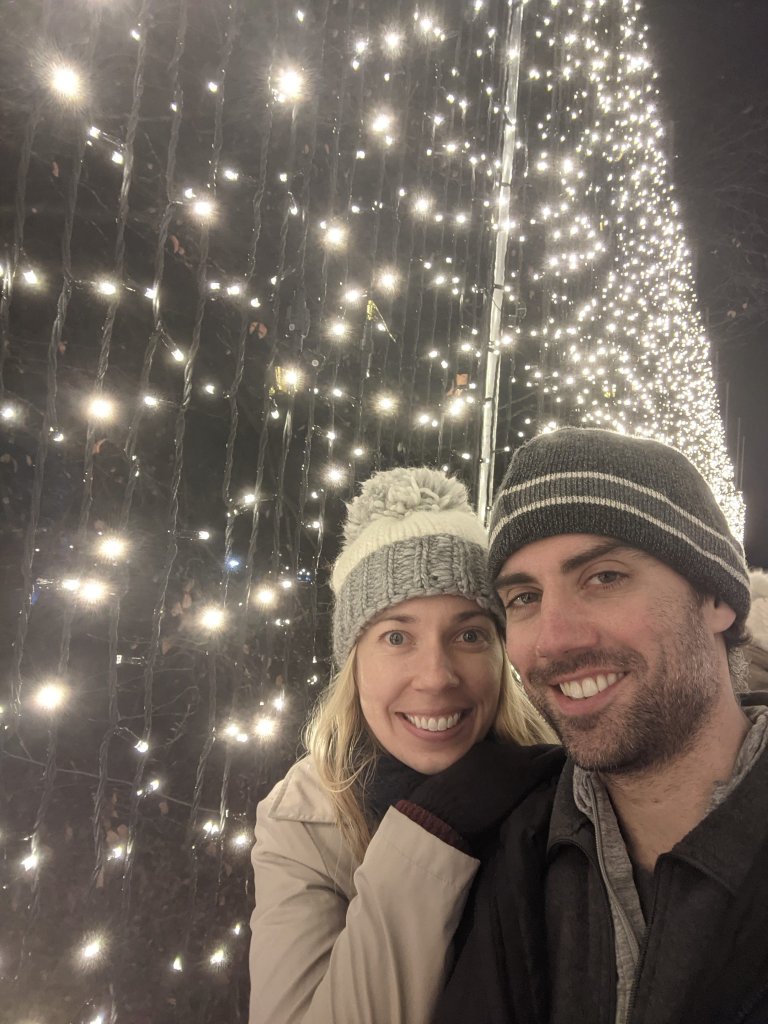
Our newfound warmth was short-lived, however, as we ventured out into the never-ending rain for more festive fun in Bute Park, which was originally part of the castle estate and is now a beautiful park that puts on a light and art display at Christmas. Armed with hot chocolate topped with lots of whipped cream (and maybe a shot of Bailey’s for extra warmth), we strolled under the illuminated trees and got into the festive spirit.
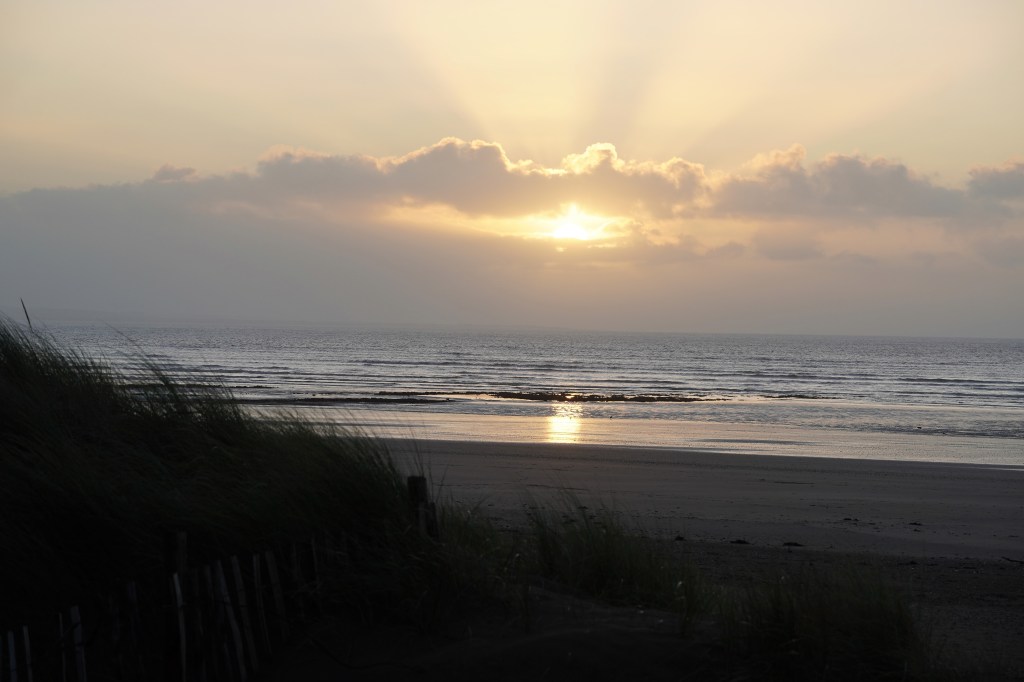
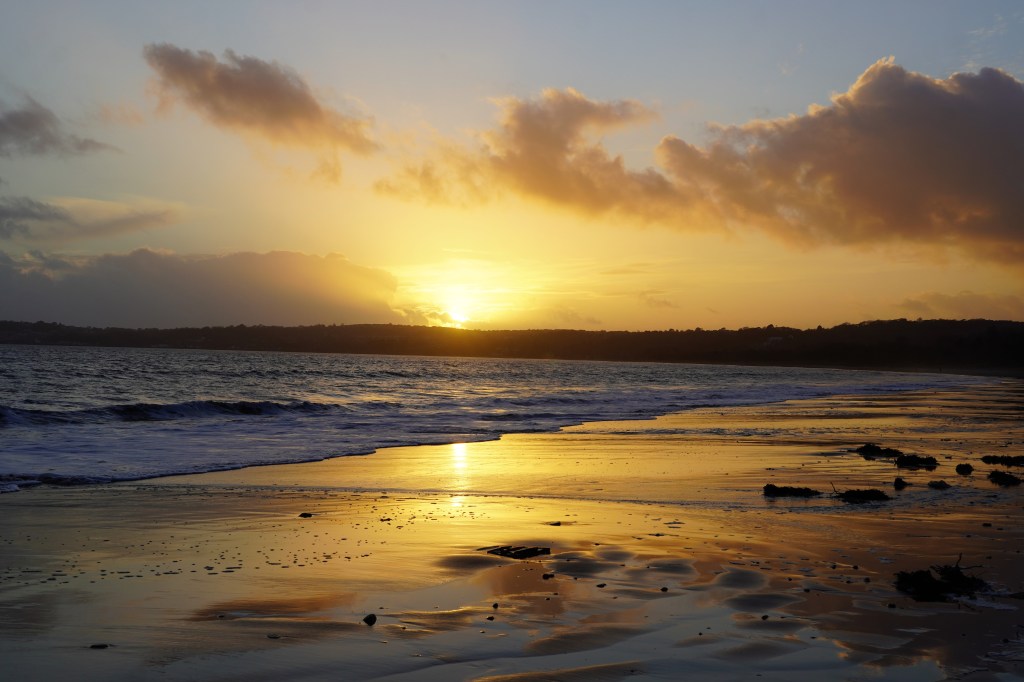
We said farewell to Cardiff the next day and cruised along the coast to Swansea. We spent lots of quality time with the ocean and the coastline. While lake and river life in Geneva is great, there is just something about an ocean that these two coastal-hearted people miss. We got our fill of sand, waves, and seashells at both sunrise and sunset, and then hopped into town to enjoy the architecture and castle ruins chilling in the middle of town and learn about the complexities of the Welsh history and identity from our Welsh friends.


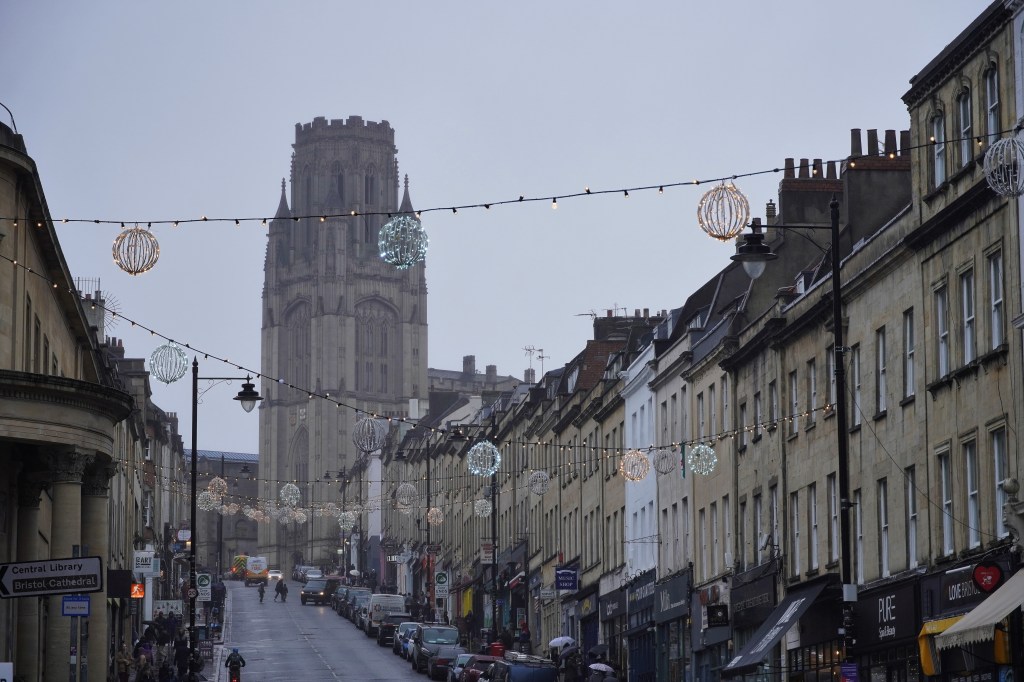
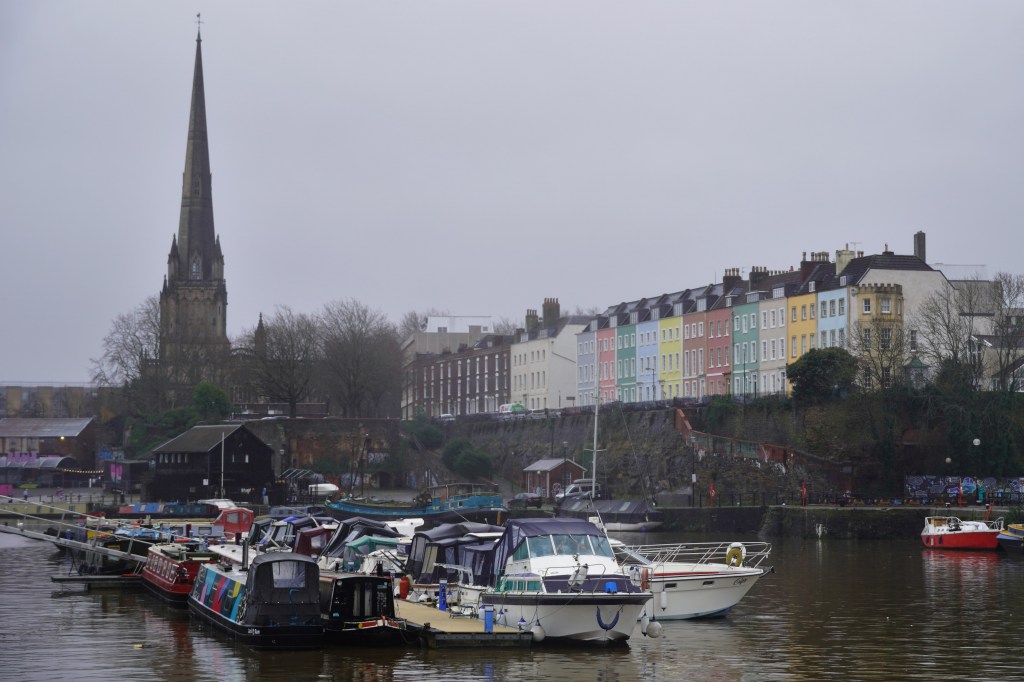
Before leaving the UK, we stopped in Bristol for a couple of days. Definitely the largest of the cities on our itinerary, Bristol has a funky-cool spirit that I loved. It is all wrapped up in the crook of a river, meaning that there are waterways and bridges in almost any direction, which makes getting lost quite easy. Our first day was devoted to getting lost in the hodge-podge of streets and alleys, checking out the castle ruins (obviously), and hanging out at the Christmas market (of course).
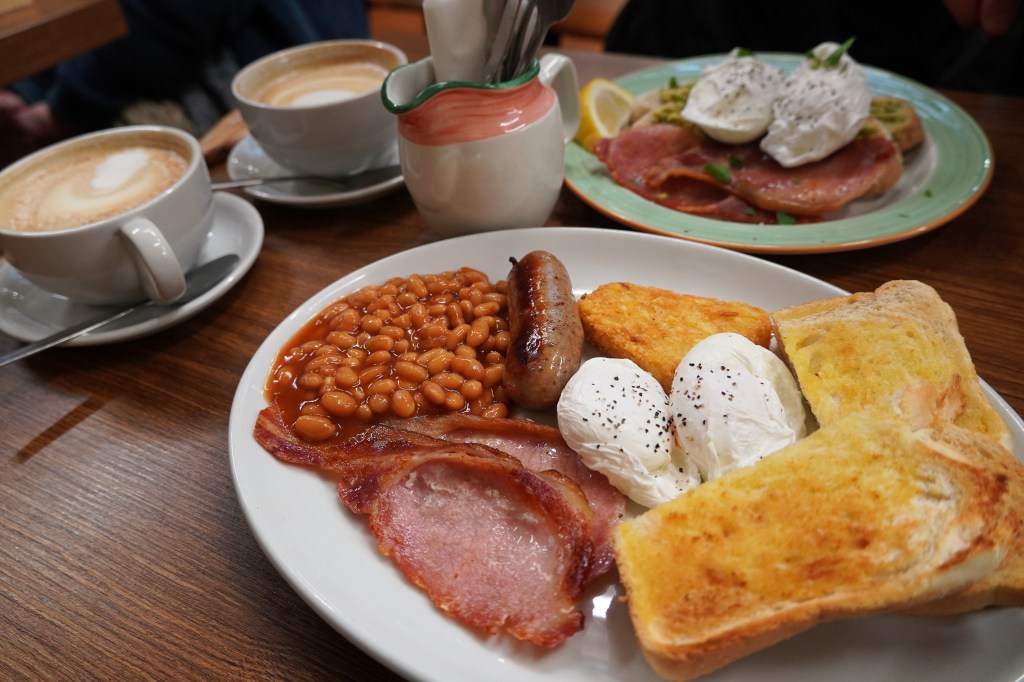
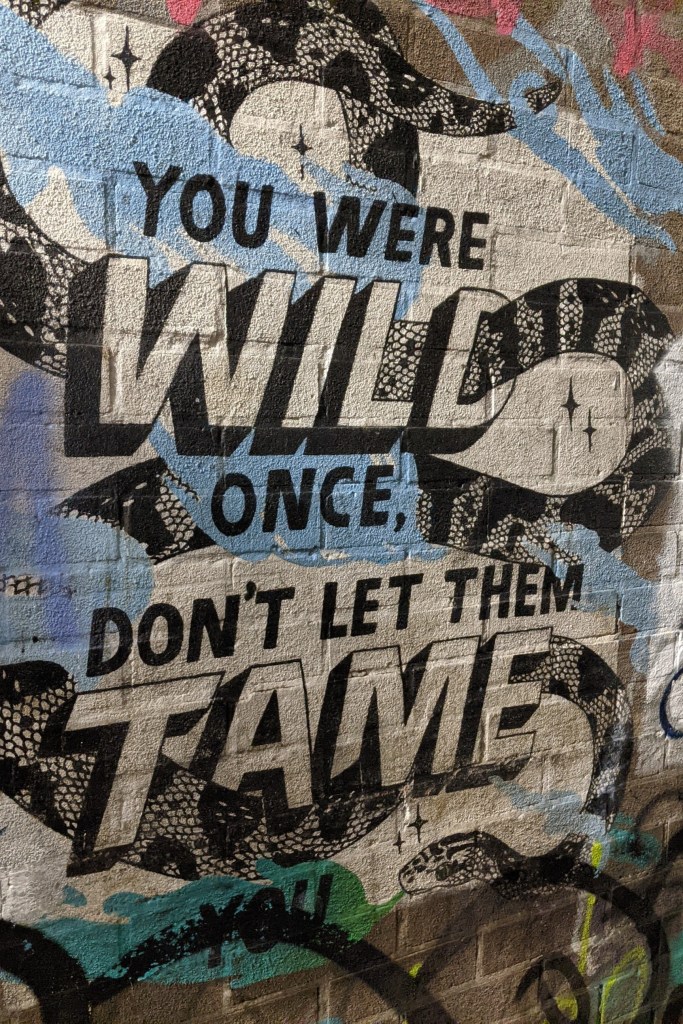
On our second day, our wanderings took a more focused turn. After an English breakfast at a café inside St. Nicholas Market, a covered market housing a delightful array of artisan and independent businesses, we set our sights first on finding all the works of street art we could by Banksy. Bristol is in general covered in an array of street art, but its most famous artist is Banksy. While no one knows exactly who he is, it is known that he is from Bristol, and he has left many works of art throughout the city. We managed to find four works on the sides of buildings and down unassuming alleys, and we marveled at the casual space this valuable art is housed in.
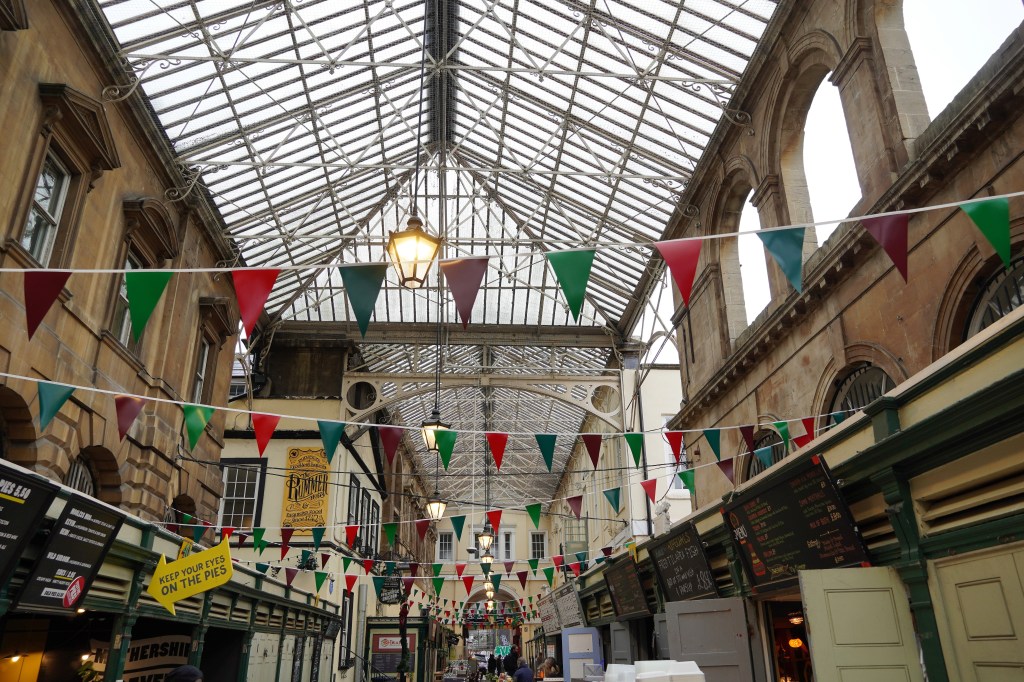
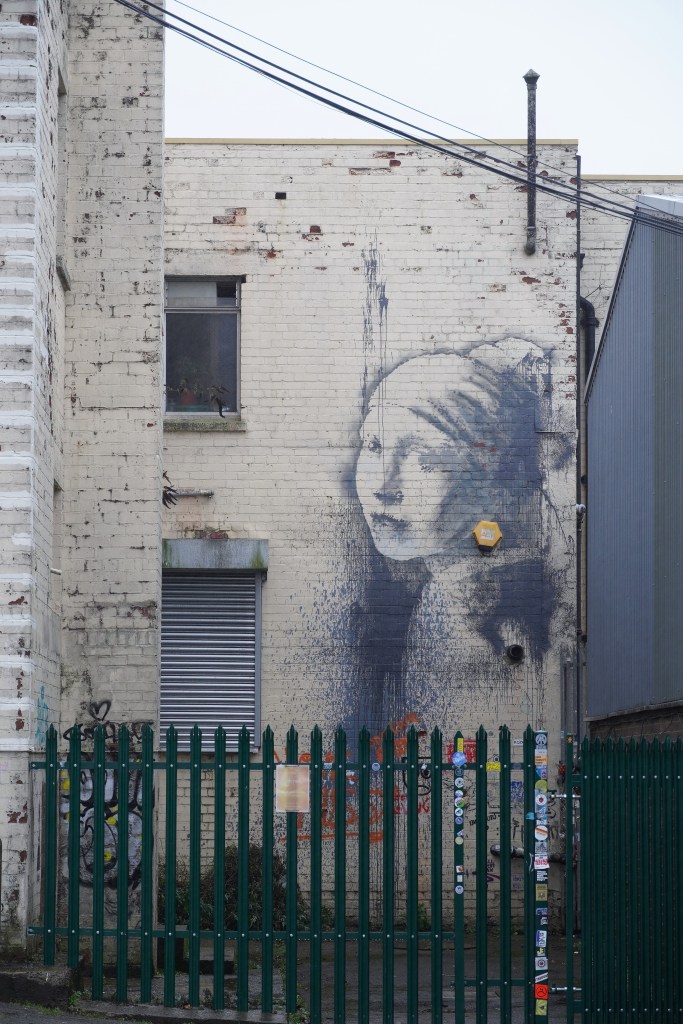
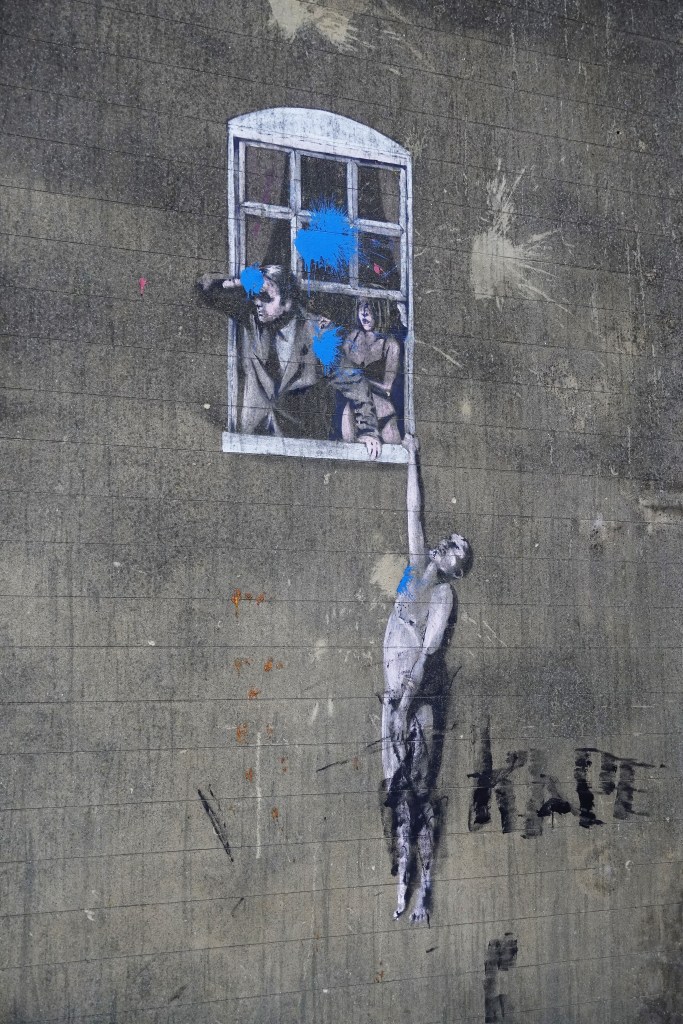
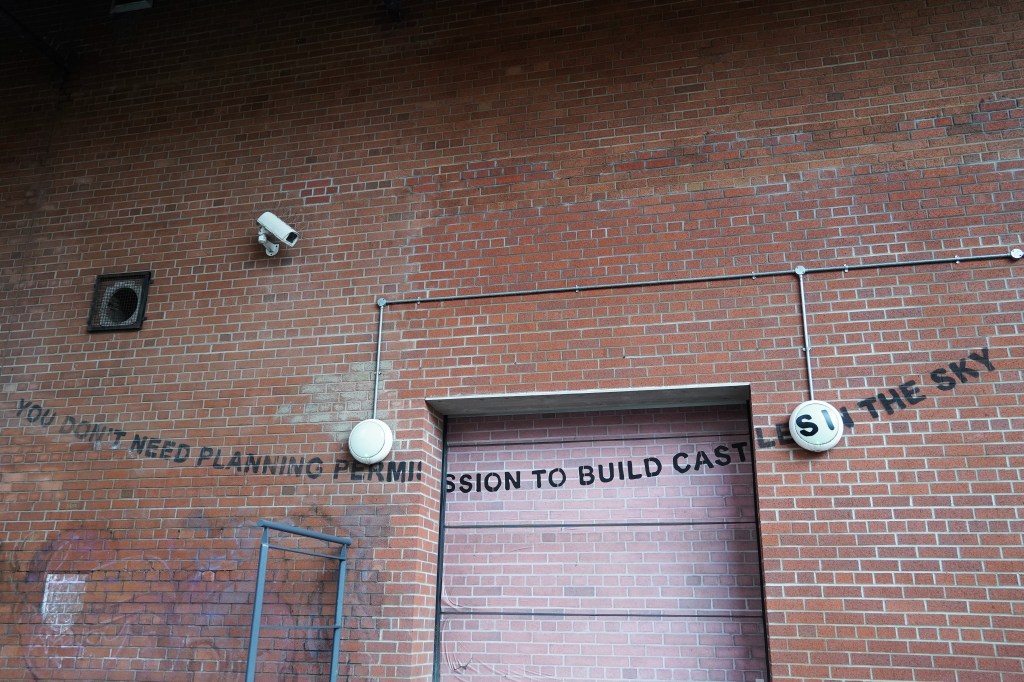

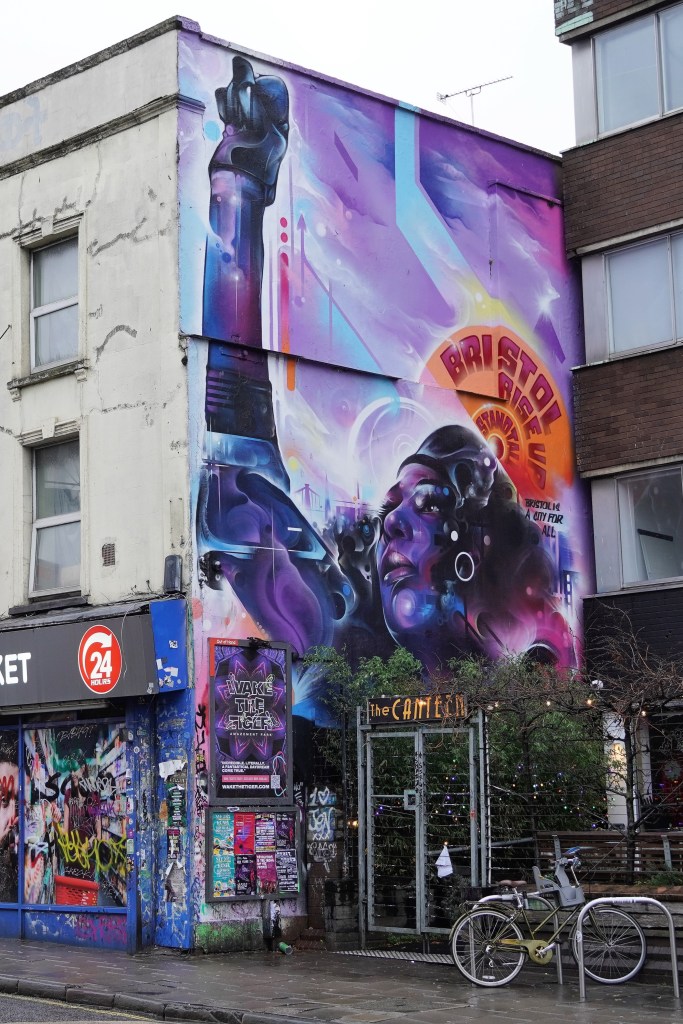
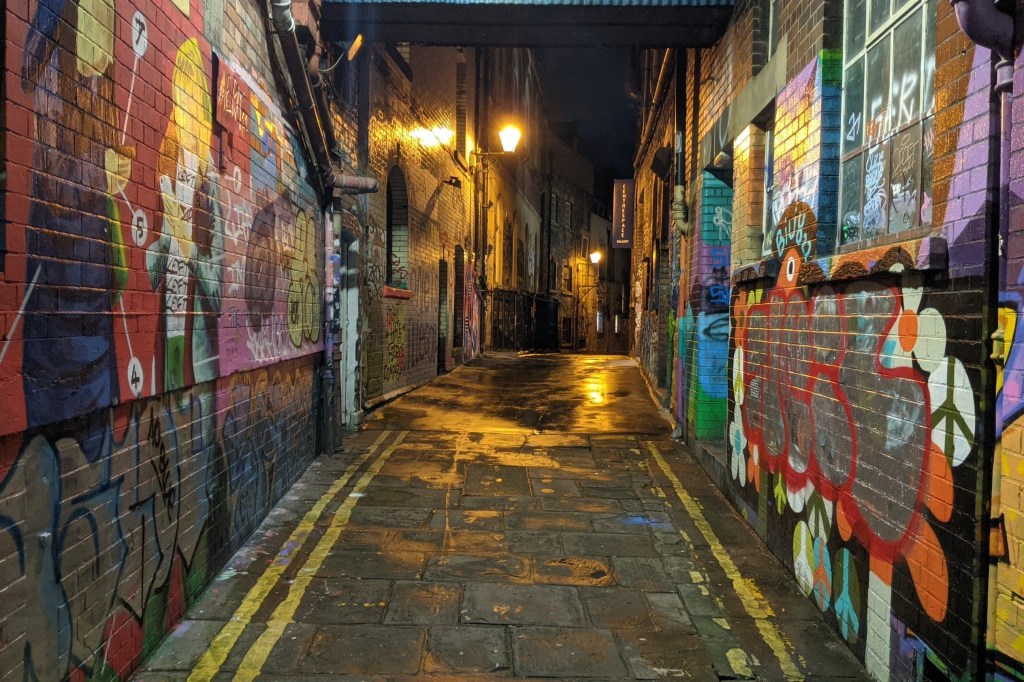
colorful alleys of Bristol.
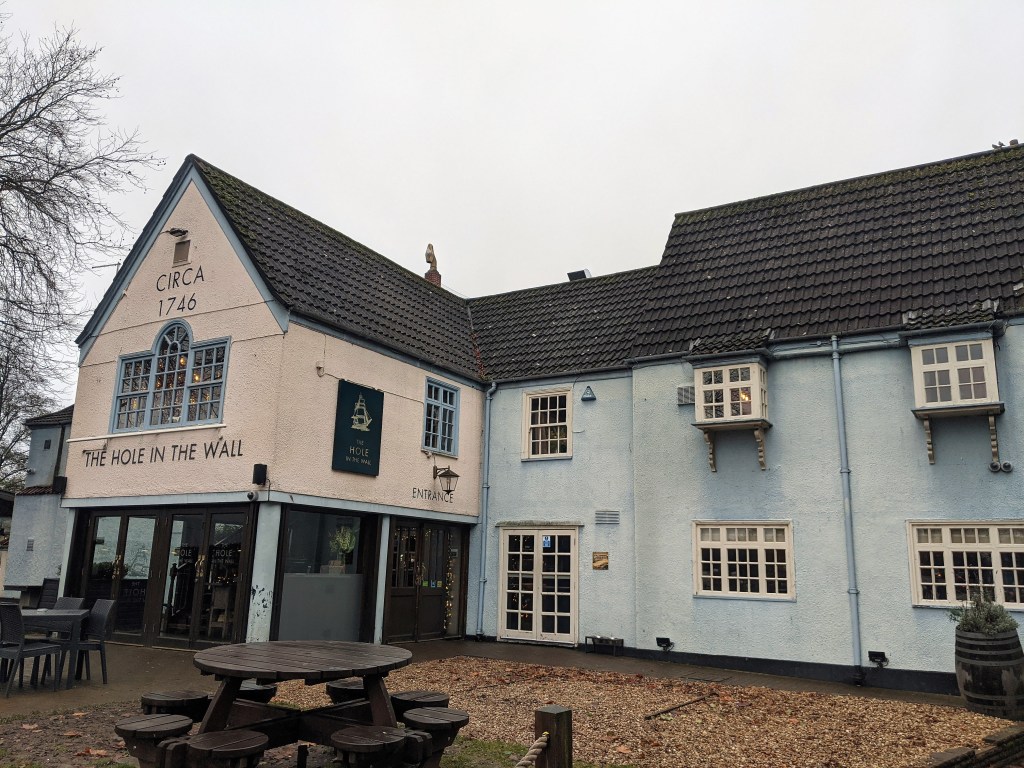
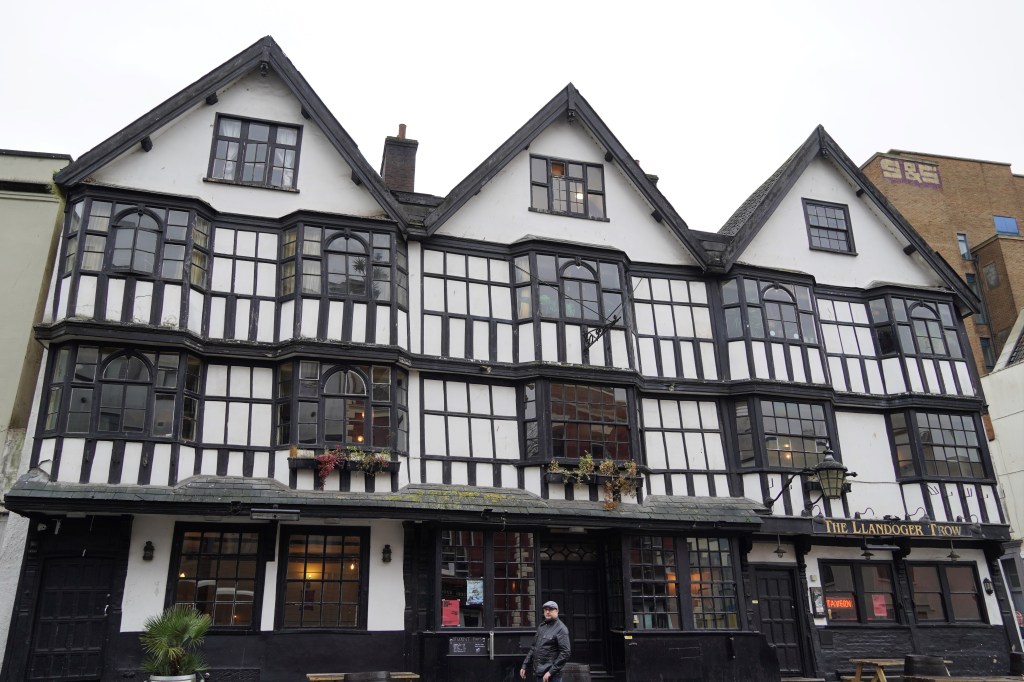
Our next mission singled out a specific element of Bristol’s history: we sought out the interesting and historic pubs in town. With its important place in seafaring history—which unfortunately included an integral role in the slave trade—Bristol was the stomping grounds of many colorful historic characters, including the pirate Blackbeard, who was said to have frequented the oldest pub in the city, the Hatchet Inn. The authors of both Treasure Island and Robinson Crusoe were inspired by Bristol pubs and the real-life stories they heard from sailors in them. Evidence of Bristol’s seafaring past is still present at the Hole in the Wall pub, where spy windows were used to keep a lookout and protect 18th-century pub-goers from press gangs forcing inebriated revelers into service on privateering ships. Wandering the historic neighborhoods, we could almost imagine it as its 17th– and 18th-century self, bustling with sailors and pirates.
And thus we wrap up a fantastic trip to more places we’ve never been!

of the pirate Blackbeard.



 On A Grand Tour
Leave a reply to Teresa Quam Cancel reply